
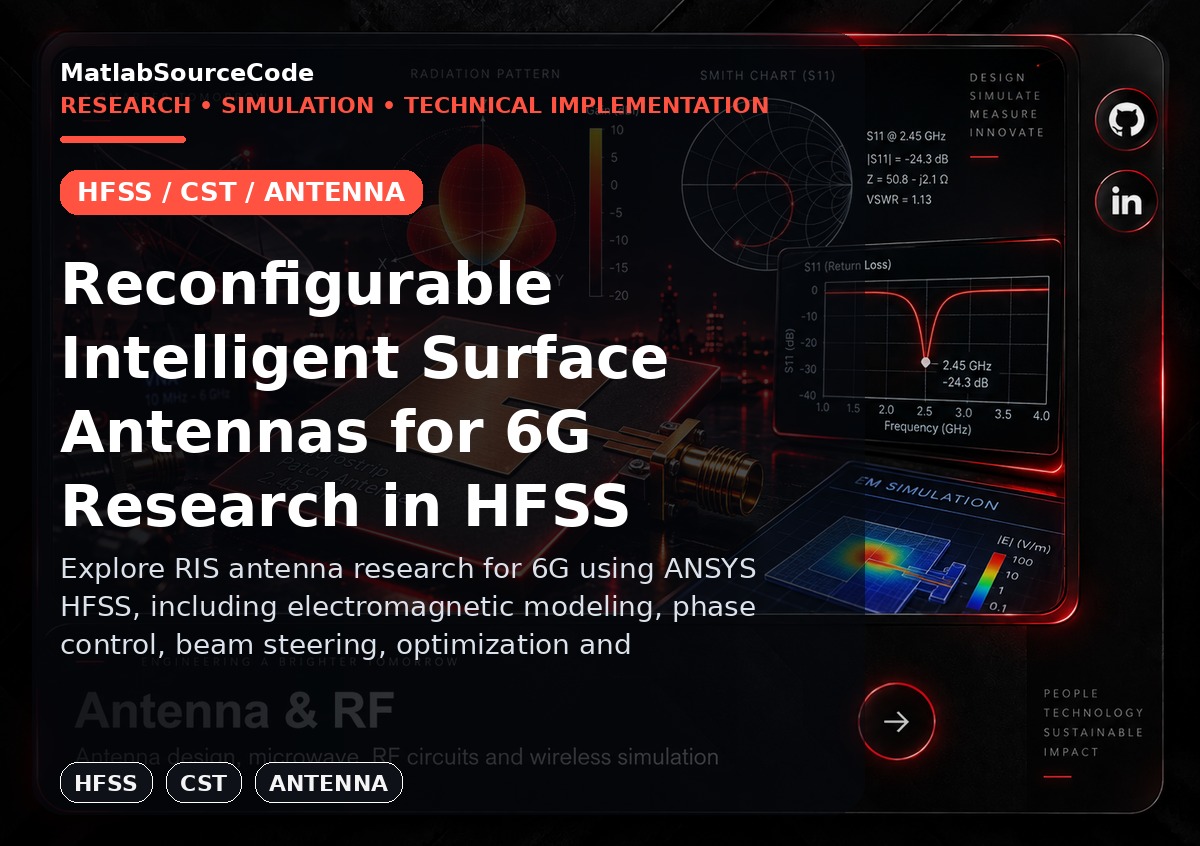
28 GHz 1-Bit RIS Design in HFSS for 6G: Unit Cell to Array
HFSS / 6G RIS

An electrically small 90 MHz loop must fit a handheld PCB while maintaining useful magnetic near field, impedance match and radiation/ohmic efficiency despite strong size and user-loading constraints.
At 90 MHz, a handheld PCB is electrically small, so the antenna behaves differently from a resonant full-size loop. Matching, loss and near-field coupling become dominant constraints.
A deep S11 dip can be created with a narrow, lossy match. Monitor current, total efficiency and magnetic near field while tuning the geometry and matching network.
For tag interaction, map the H-field in the intended coupling volume and test orientation or distance. This is more application-relevant than far-field gain alone.
A handheld device should include cases with housing and hand proximity. Parameter sweeps can show how much retuning or adaptive matching is required.
Tunable matching, ferrite loading, tag-coupling co-design and multi-grip robustness are useful research directions for an electrically small RFID loop.
Share your project title, abstract or base paper, preferred software version and required plots. The existing video project can be reviewed as a baseline and extended around a measurable research objective.
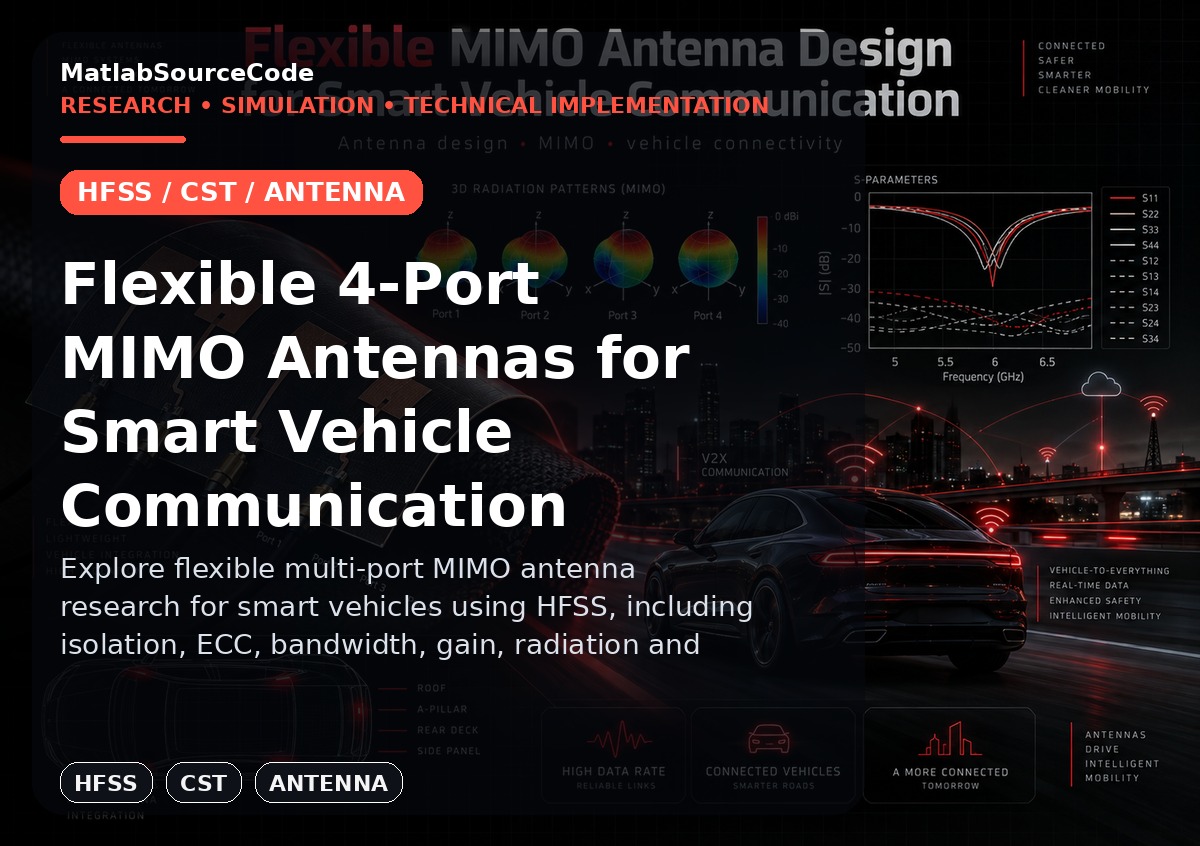
HFSS / Printed Antennas
HFSS / CST / FSS
HFSS / Printed Antennas


