Decentralized Machine Learning-Based Protection for AC Microgrids DIgSILENT PowerFactory 2024
Machine-learning assisted protection, fault detection, classification and location study for ac microgrid or distribution-network operation. This page is structured for engineering students, OEM teams and PhD research scholars looking for simulation output references, waveform explanation and model implementation support.
PROJECT_THUMBNAIL
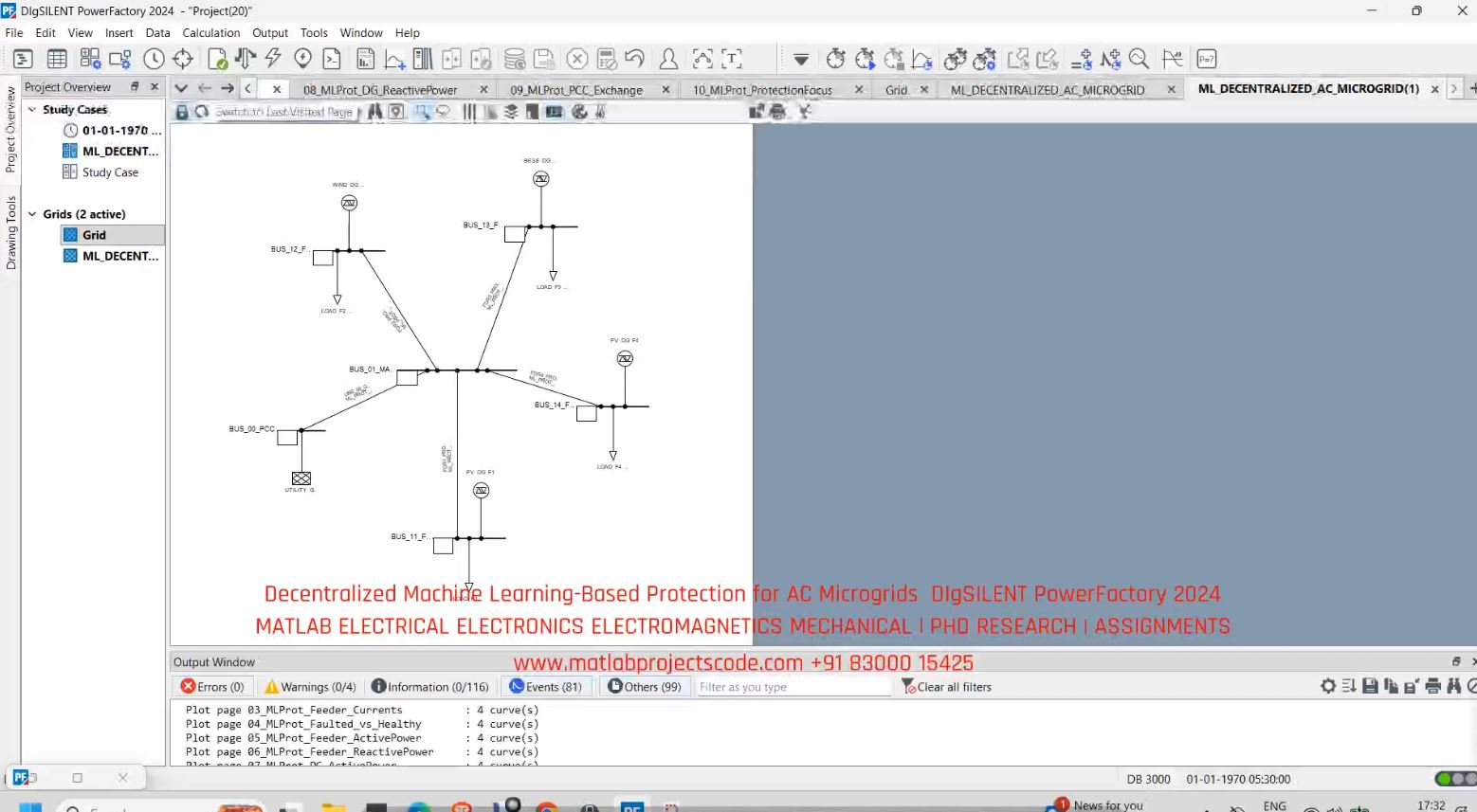
Project Objective
Machine-learning assisted protection, fault detection, classification and location study for ac microgrid or distribution-network operation.
DIgSILENT PowerFactory 2024 with scopes, simulation events, controller blocks, signal logging and waveform analysis.
Automated fault scenario generation, voltage/current feature extraction, sequence component analysis, supervised classification and protection decision logic.
Three-phase voltage/current, fault class, estimated fault location, relay decision, breaker status, frequency, power flow and comparative protection accuracy.
Microgrid protection, inverter-dominated distribution feeders, smart relays, ieee-bus studies, oem protection validation and phd-level fault-analysis research.
Simulation Model Explanation
The model can be used to study controller behaviour, transient performance, input/output response and result quality under representative operating conditions. The project page supports model verification, research report preparation, waveform interpretation and implementation discussion for Electrical Engineering workflows.
Result Interpretation
Result interpretation focuses on stable response, improved regulation, reduced error or harmonic content, and useful comparison between reference command and measured simulation output. The displayed video and thumbnail provide a quick visual check before contacting for the full model, code, explanation or documentation.
Need this simulation model?
Share the project title, software version, required outputs and deadline. We support OEM-style validation, PhD research implementation, report writing and waveform explanation.
Open Contact Page →